Why GEO Optimization Platforms Are Becoming Essential for Brand Visibility
For most of the past decade, digital marketers focused on one thing: ranking high in Google Search. If you could hold a top spot for your target keywords, the traffic followed. But that world is shifting. Large language models like ChatGPT, Claude, Gemini, and Perplexity now answer questions directly, often without citing sources. Users are getting answers without clicking through to a website. That changes the game for brand monitoring and search engine optimization as we knew it.
I have spent the last two years tracking how generative AI and semantic search are reshaping digital presence analytics. The tools we once relied on, traditional SEO software and web crawlers, still matter. But they miss a growing slice of the web: the invisible conversations happening inside chatbots and AI-generated summaries. That blind spot is where GEO optimization platforms enter the picture. These tools try to measure and improve how your brand appears in the responses of large language models, not just in traditional search engine results.
What GEO Optimization Platforms Actually Do
GEO stands for Generative Engine Optimization, a term that emerged alongside the rise of AI content detection and conversational interfaces. The core idea is simple but hard to execute. Instead of optimizing your content for a keyword ranking algorithm, you optimize it so that an LLM will mention your brand, product, or service when answering a user question. Think of it as brand visibility for the post-search era.
GEO optimization platforms typically combine entity recognition, knowledge graph analysis, and AI visibility tracking. They scan how ChatGPT, Claude, Gemini, and Perplexity treat your brand. They check whether your company is mentioned in the same breath as competitors, whether your product is recommended over alternatives, and whether the AI even knows you exist. Some of these platforms also monitor how your brand appears in AI-generated snippets inside Google Search and Bing. The overlap between traditional search engine optimization and GEO is real, but the techniques differ.
For example, a standard SEO audit might tell you that your page ranks second for a certain query. A GEO audit might tell you that ChatGPT mentions a competitor first when someone asks for a solution in your space. That distinction matters because users trust these AI responses. If your brand is absent from the answer, you do not exist in that conversation.
How the Tracking Works
The methods vary across platforms, but most rely on a combination of API calls, simulated user queries, and web crawlers that feed data into LLMs for analysis. Some tools use their own proprietary models to predict how a given LLM will respond before it actually does. Others run live queries against the major AIs and compare the outputs. A few platforms also monitor brand mentions across social media and traditional news to build a fuller picture of digital presence.
I have seen a few patterns emerge from using these tools. First, entity recognition is critical. If the LLM does not connect your brand name to the right topic cluster, you will not appear in relevant answers. Second, consistency matters. Contradictory information across your own website, support pages, and third-party reviews can confuse the model. Third, citations still carry weight. If authoritative sources link to your content, the LLM is more likely to cite you.
None of this is magic. GEO optimization platforms give you data, but you still have to act on it. The best approach I have found is to treat these tools as an extension of your existing brand monitoring and SEO software stack, not a replacement.
Why Standard SEO Software Falls Short
Traditional SEO software is built around the assumption that search engines return a list of links. You optimize for the link. But generative AI returns a single paragraph or a short list of bullet points. There is no rank five or rank six. If you are not in the top two or three entities mentioned, you are effectively invisible. That is a hard truth for marketers who spent years building backlinks and fine-tuning meta descriptions.
Another limitation is that LLMs do not always behave like web crawlers. They do not index the entire internet. They are trained on snapshots of data, and their knowledge can be months old. Some models, like ChatGPT and Perplexity, now include live search plugins, but the way they interpret and present information is different from a search engine results page. Google Search and Bing have their own AI summaries now, and those summaries pull from a different set of signals than traditional organic results.
AI content detection is still an evolving field. It is hard to know exactly why an LLM answered one way instead of another. But that is exactly why GEO optimization platforms are valuable. They give you a monitoring layer that traditional SEO tools cannot provide. They track the output of the model, not just the input signals.
Practical Steps to Improve GEO Performance
Based on what I have seen work across multiple brands, here are a few tactics that actually move the needle:
- Structure your content with clear entity relationships. If you run a software company, make sure your product name, category, and key features appear together frequently in your own content and in trusted third-party sources.
- Build citations into your knowledge graph. The more often your brand is mentioned alongside credible publications and well-known industry terms, the more likely the LLM will include you in its answer.
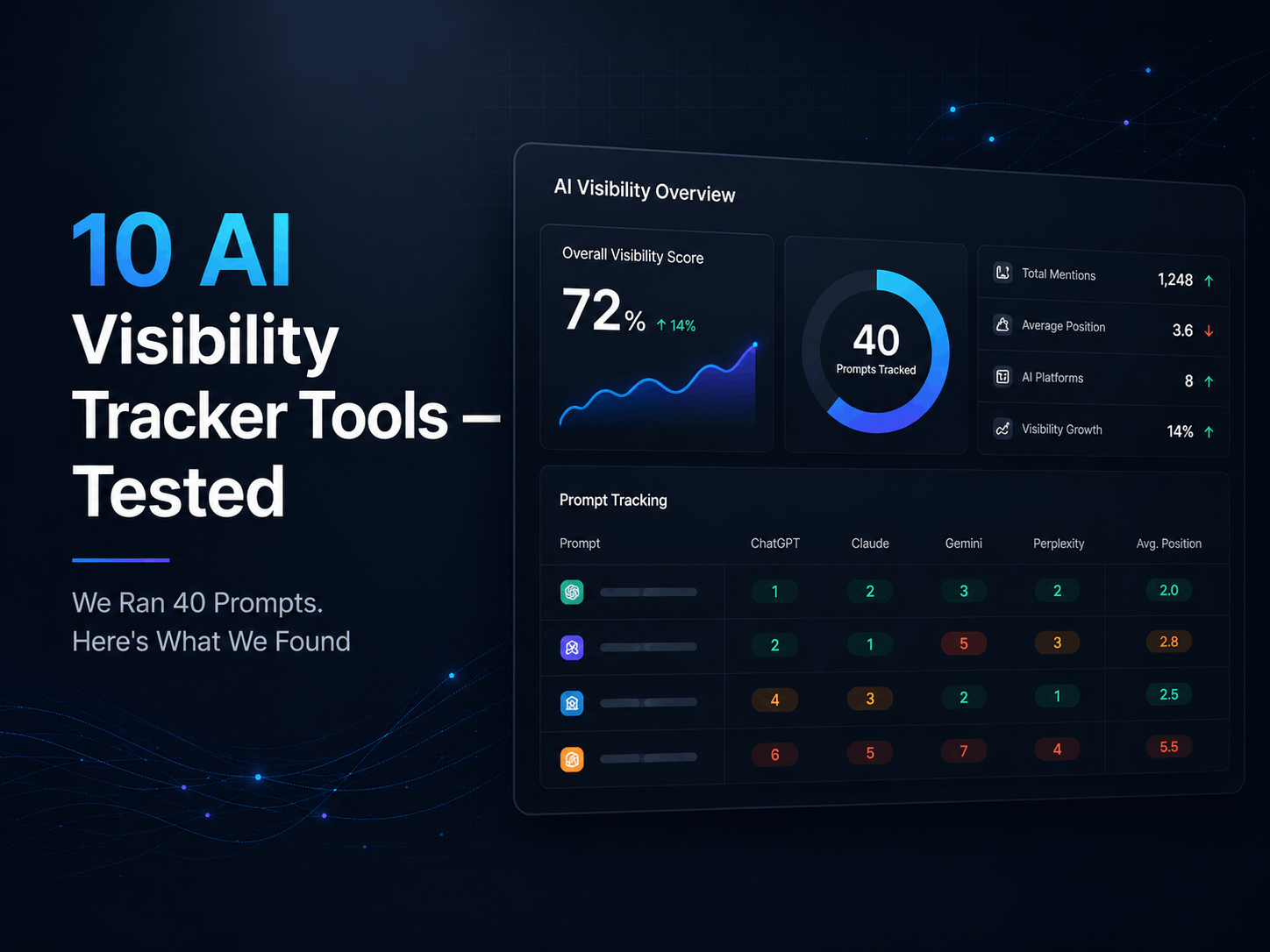
- Monitor your brand mentions across ChatGPT, Claude, Gemini, and Perplexity regularly. Set up alerts for changes. If your brand disappears from a key answer, investigate what changed.
- Optimize for precision, not volume. A single well-crafted page that answers a specific question is more likely to be quoted by an LLM than ten thin articles that cover the same topic broadly.
- Coordinate with your traditional SEO team. The same content improvements that help in Google Search often help in GEO, but the framing may need to be more direct and answer-oriented.
I have seen a mid-sized B2B brand gain a mention in ChatGPT responses for its core category within three months by following these steps. They did not change their product. They just made their entity relationships clearer and published one definitive guide per topic instead of scattering many small posts.
The Limitations You Should Know
No GEO optimization platform can guarantee a specific mention in an LLM response. These models are black boxes by design. Their behavior changes with updates, and the training data is not public. What works today might not work next month. That uncertainty is uncomfortable for anyone used to the relative predictability of Google Search, but it is the reality of working with generative AI.
Another issue is cost. Most GEO optimization platforms are still niche products. They are not as mature as mainstream SEO software, and the pricing can be high relative to the data you get. Some platforms charge based on the number of queries they run against the LLMs, which can add up quickly if you track many keywords. I recommend starting with a small set of high-value terms and expanding only after you see results.
There is also the question of accuracy. LLMs hallucinate. They make up citations. They sometimes give wrong answers. If your brand is mentioned in a hallucinated context, the GEO platform might flag it as a positive mention when it is actually a problem. Manual review is still essential.
Where the Field Is Heading
By 2026, I expect AI visibility tracking to become a standard part of any serious brand monitoring program. The gap between what traditional SEO software measures and what actually drives user attention will keep widening. GEO optimization platforms will likely evolve to incorporate more real-time data, better entity recognition, and deeper integration with knowledge graphs. Some will merge with existing SEO suites. Others will remain standalone.
For now, the smartest move is to start experimenting. Pick one or two platforms, track a handful of key queries, and see what you learn. The data from these tools often reveals blind spots that no other monitoring method catches. That alone is worth the investment.
authorityradar.com has been tracking this space closely, and their comparisons of the leading tools can help you decide where to start. But no matter which platform you choose, the core insight is the same: if you are not visible in generative AI, you are losing ground to competitors who are.